

http://www.konitsa.gr/visit/villages/34-plekati
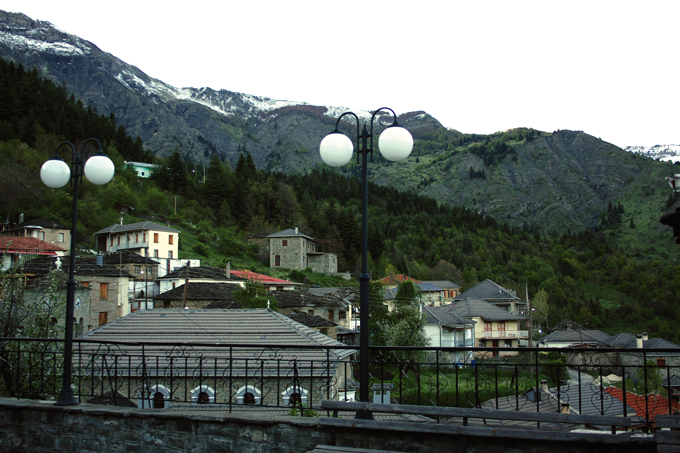
Above the 1200m on the slopes of Mt. Grammos, the Plikati village is built. The village has a very long history (over 1000 years) but unfortunately most of the buildings were built after the WWII on the ruins of the destroyed ones. Although the buildings are relatively new, all of them were made of local stone with traditional techniques, preserving the values and the history of their ancestors. The impressive natural environment with great biodiversity and steep landscape was the framework in which the locals developed an economy based on technical expertise of the male polulation. Moreover, the name of the village is closely associated with the skills in elaborating the stone for the construction industry -Plikati pronounced the 'Pelekati', which is the hewing of stone. The craftsmen from Plikati were also famous from Balkan Peninsula to Russia and Europe, to Turkey, to Africa, and even to the Unites States. As it was a summer passage with various streams for Vlachs stockbreeders, the women also developed a unique cottage industry.


