
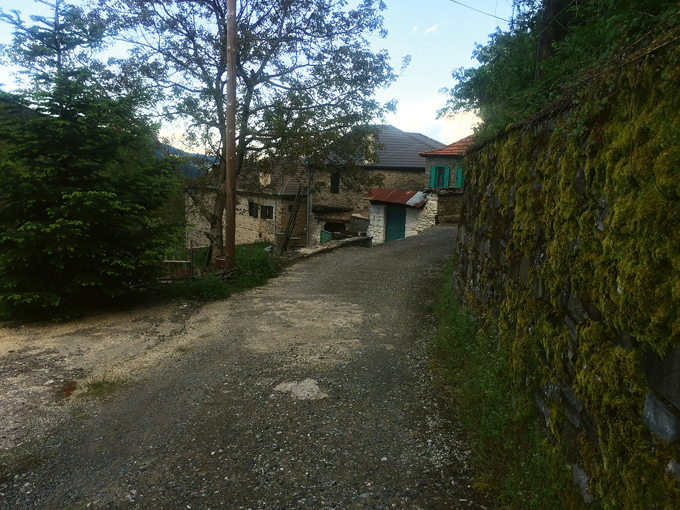
Hioniades is built near to Greek-Albanian borders at 1120m alitutde. During the 18th and 19th century the male population of the village was specialised mainly initially in woodcarving, and became famous from the 'fares' of painters. The strict regulations of the craftsman guilts, organised around the family structure called 'fara', resulted in contracts and officially signed works. Thus, their significant work of art can be identified all over the Balkans, despite the fact that the secular art is rare-preserved. The New School has been transformed into a museum that promotes and safeguards the culture of painters from Hioniades. In the village are still preserved traditional buildings that were built from the neighbouring stone craftsmen. The underpopulated village becomes vibrant every summer period.
Religious Monuments:
- Aghios Athanasios (1866)
- Aghios Nikolaos (17thC)
- Aghia Paraskevi
- Prophet Elias
- Aghia Triada (Skourtis et al. n.d.: 6-7)
Secular Monuments:
- The the Old School (1905)
- The New School/Museum of Painters from Hioniades (1911)
- The Paraspori Bridge
Intangible Heritage:
Hioniades is the birthplace of the famous "Fares" of painters that travelled throughout the Balcan Peninsula and decorated important Mansions and numerous churches and chapels. They safeguarded, preserved and developed the post-byzantine art and expressed the customs and prejudices of the humble people. Inspired from the natural environment they kept their secrets within their families and transmited them from the one generation to the next since the 16th C. The Museum and the efforts of the active locals are key agents for the preservation of this unique cultural heritage (Polimerou-Kamilaki & Skourtis 2008; www.konitsa.gr/visit/villages/42-cioniades).